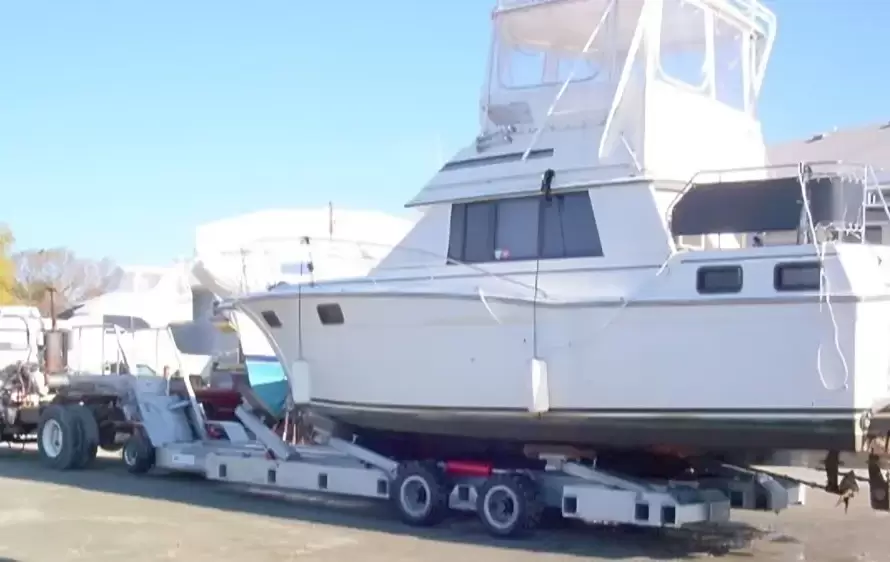
Buying the wrong trailer rarely feels like a mistake on day one. It shows up later when loading takes longer than expected, when the boat doesn’t sit right, or when operators start working around the equipment instead of with it. That’s usually the point where people start looking at a hydraulic lift trailer. Not as an upgrade, but as a fix. This blog breaks down what actually matters before you invest, so you don’t end up correcting a costly decision later.
What a Hydraulic System Really Changes
At a basic level, a hydraulic lift trailer reduces manual effort. But that’s not the real value. The real difference is control.
Instead of forcing the boat into position, the trailer adjusts to the boat. That means:
- More precise lifting and lowering
- Better balance across the hull
- Less stress on structural points
For operations handling different boat sizes, that flexibility isn’t optional. It’s what keeps things running smoothly.
Not All Hydraulic Trailers Work the Same
This is where most buyers assume too much. Just because a trailer uses hydraulics doesn’t mean it performs well in real conditions.
A well-built hydraulic boat yard trailer is designed for:
- Consistent lifting across uneven ground
- Stable handling under heavy loads
- Long operating cycles without failure
Lower-quality builds may still lift, but they struggle with control, which defeats the purpose.
Why Basic Trailers Fall Short Over Time
Traditional trailers can work fine in the beginning. The problem is, they depend heavily on manual adjustment and ideal conditions.
Over time, issues begin to surface:
- Uneven ground makes positioning harder
- Heavier boats strain manual systems
- Loading becomes slower and less precise
These small inefficiencies stack up. What once took minutes starts taking longer. What once felt manageable becomes frustrating. That’s the gap a hydraulic system is meant to close.
Where Most Buyers Go Wrong
The mistake isn’t choosing hydraulics. It’s choosing without clarity.
Typical problems are:
- Concentrating on lifting capacity
- Ignoring the position of the trailer’s weight
- Ignoring maintenance requirements
- Assuming all of the systems are user-friendly.
These gaps are not only costly but also inefficient.
Matching the Trailer to Your Operation
A hydraulic lift trailer should fit your workflow, not just your budget.
Think about:
- Frequency of use
- Types of boats handled
- Surface conditions in your yard
If you’re working in a marina or service yard, a hydraulic boat yard trailer built for short-distance movement and tight spaces will perform far better than a general-purpose option.
The Role of Build Quality
Hydraulics get attention, but structure does the real work.
A strong trailer includes:
- Reinforced frame design
- Durable hydraulic components
- Reliable axle and braking systems
Without this foundation, even a good hydraulic system won’t last. This is why manufacturers like Minuteman Boat Handling Equipment focus as much on structure as on function.
Maintenance Is Part of the Investment
Hydraulic systems are reliable, but not maintenance-free.
Expect to manage:
- Fluid levels and quality
- Hose and seal condition
- Regular system checks
The good part is that, when maintained properly, these systems offer long-term consistency. Skipping maintenance is what turns a good investment into a recurring expense.
When the Investment Makes Sense
Not every operation needs hydraulics. But in terms of efficiency and safety, the handwriting is on the wall.
If you are looking at a hydraulic lift trailer, consider it if:
- You often deal with boats
- You work with different sizes and weights
- You want to cut the risks of manual handling
In these cases, the return is more than just financial. You see it in the smoother operations and fewer disruptions.
Why Experience Matters
One thing is to buy the equipment. Another is to see how it behaves over time.
Minuteman Boat Handling Equipment also works with real marine operations. That means their designs reflect actual use, not just specs. That experience helps to steer clear of common pitfalls, whether you are assessing a hydraulic lift trailer or investigating a hydraulic boat yard trailer.
Conclusion
A hydraulic system can improve efficiency, but only when it’s built and chosen correctly. The real value lies in control, durability, and how well the trailer fits your daily operations. Rushing the decision often leads to replacing equipment sooner than expected.
We at Minuteman Boat Handling Equipment focus on building hydraulic lift trailers and hydraulic boat yard trailer solutions that match real working conditions. Our goal is to help you invest once and use it with confidence for years. If you’re planning your next upgrade, connect with us and let’s build something that works the way it should.
FAQ
What is a hydraulic lift trailer used for?
It’s used to lift, transport, and position boats with better control and reduced manual effort.
How is a hydraulic boat yard trailer different?
It’s designed for short-distance movement within yards, offering stability on uneven surfaces.
Are hydraulic trailers hard to maintain?
Not really, but they require regular checks on fluid, hoses, and system components.
Is a hydraulic lift trailer worth the cost?
Yes, especially for frequent operations where efficiency and safety matter.
Can one trailer handle different boat sizes?
A well-designed hydraulic system can adjust to multiple sizes within its capacity.
What should I check before buying?
Look at build quality, hydraulic performance, and compatibility with your operations.
Do hydraulic systems fail often?
Not if properly maintained. Most issues come from neglect or poor build quality.
Is customization necessary?
It depends on your needs, but a better fit improves performance and safety.
How long do hydraulic trailers last?
With proper care, they can last many years in demanding environments.
Why choose a specialist manufacturer?
They understand real usage conditions and build equipment that performs reliably over time.